


UX
Intent Driven
Path Factory
Intelligent Experiences
AI Engagement Insights
This Canadian SaaS Account-Based Marketing platform transforms content into personalized, AI-powered journeys that engage buyers and reveal true buying intent.
PathFactory’s Intelligent Experiences aren’t just automation. They augment human discovery and decision-making by recommending the right content at the right time, guided by AI.

AI Concierge Experience
Challenge:
Market Differentiation: What offerings will customers care about (and pay for) while also making life easier for the customers they already have?
Talent Gap: What does it take to launch a customer-focused product if your team has never had a UX role to shape a human-centered strategy that drives adoption and retention?
Goal & Solution:
1. Introduce a natural, customer-centric AI experience:
This new concept, coined the “concierge experience,” served as our north star for an updated product that simplified workflows through AI-assisted campaign creation and key account and lead analytics.
My team and I developed prototypes and guidelines for etiquette, cultural norms, and conversational style to train the LLM to interact naturally with customers and create a warm, consistent experience from first visit through return engagement.
2. Personalize generative AI microsite creation
In 2023, the client broadened their market and integrated LLMs to build microsite experiences connected to other agent actions. This new agent experience empowered marketing teams to develop campaigns based on customer habits, engagement, and intent signals. It features “done-for-you” campaign creation and provides key account and lead analytics, supported by AI.
3. Create content intelligence with robust analytics and reporting:
Analytic dashboards and infamous for providing data but little to no insight on what actions to take. Our approach was to take it one step further, to allow our analytics to "connect the dots" for our customers, providing them insights to make impactful action.
Guiding Principles for AI
Learning from real human connection
With our AI Guiding principles, I set forth defining a personality and set of guidelines to establish a human-like concierge experience based on some of the best books and resources about etiquette, case studies of companies with best customer service, art of conversation, manners and ethics. Taking the best of those learnings, created a guideline and prototype for the LLM to have a learned behavior applied to customers
-
Progressive Trust Building via Value-First Personalization
-
Surface Multi-Level Contextual Memory
-
Transparent, Consensual, User Control and Ethically Minded
-
Agent as Trusted Partner, Not Just a Tool
Just like a real butler or concierge, we aim to make customers feel cared for throughout their entire journey.
Hi Sandy, welcome back!
Glad to see you again. Would you
like to start where we left off?
Based on our KPIs, our aim was to provide valuable, actionable content, and a genuine human approach via progressive personalized interactions because that is what builds stronger relationships and ultimately more stable revenue.
Defining Success
With a solid data foundation and clear understanding of customer needs, we set out to make exceptional, concierge-like service our guiding star. However, we needed to ground our success in measurable outcomes.
Demonstrate added value to the user
GOALS
Provide valuable, actionable content
Gain trust, gather insights
Loyalty. Distinguishing frequent users from occasional ones
Personalized interactions means more revenue.
MEASURES
Content Consumption/User Engagement: Depth and breadth of content engagement. (pre & post personalization)
Experience Engagement: % of time customers engage with, create, and share experiences
Conversion/Attractiveness: % Rate at which users voluntarily share personal information on 1st visit.
Return Visitor Rate: Frequency & Recency of Site Visits
Pipeline Attribution: Revenue impact measurable to personalized agent interactions
Considerations
We acknowledge project success doesn't depend solely on customers.
Many projects get derailed by internal processes, team dynamics, and factors beyond our control.
Such as:
-
Project Ambiguity
-
Platform Complexity
-
Data Sources / Constraints
-
Customer Variation
-
Team Bandwidth
Research
Through competitive analysis and interviews with both internal customer service teams and customers, we gained insights into what users find most valuable for completing their everyday tasks and achieving their goals.
Driven by our AI Guidelines, I gathered insights from sources that outline cultural norms, etiquette, manners, examples from renowned companies celebrated for their outstanding customer service. Additionally, I explored definition of the five stages of conversation. We then integrated Marketing Archetypes and Sales Funnel stages to create a cohesive conversation, offering guidelines the LLM on what to say, when to say it.
All of this research informed how to respond based on four criteria: Sales Funnel, Archetype, 5 Conversational Stages, and Use for exemplary customer service. This comprehensive information formed a structured framework.
AI Adaptive Conversation Framework
4 Criteria Informed the AI Adaptive Conversation
-
Sales Funnel Stage
-
Customer Archetype
-
Conversational Stages
-
Use for Exemplary Customer Service

Attribution: Sarah Berchild
Explorations
Concept: Actionable Campaign Analytics
We have data, but it’s only valuable if it offers insights. We've examined ways to present data and provided marketers with tips for utilizing this information effectively.


Attribution: Maria Motta, Ayobami, Balogun
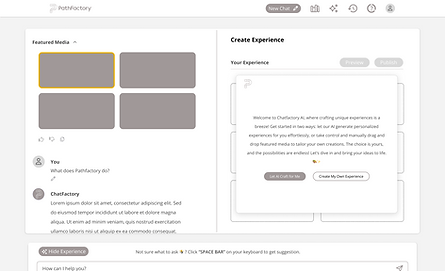
Our objective was to enable marketers to effortlessly create campaigns featuring relevant articles and media tailored to their customers' insights, allowing them to quickly develop a microsite experience without any coding knowledge.
Concept: "Done for You" Campaign Creation

.png)

Attribution: Ayobami, Balogun
Pinpointing Delight
Mapping the Journey
As stewards of our brand and builders of clarity, we designed AI-native experiences that make complex systems feel simple, human, and intuitive. We began by focusing on the end-to-end customer journey, identifying the moments with the greatest potential for delight, then mapped out that experience.

Building with AI

Prototyping
Along the way, it became clear that the complexity of the conversations were too robust for the static, yet clickable prototypes. So I began building light-weight prototypes that began to incorporate logic.
In this case, to build out the "guest" vs. "known" flows - and begun testing areas of the journey were we can begin to introduce value-added offers. Building in Vercel (V0) also gave great flexibility as the prototype was flexible, responsive in size and could introduce logic in ways that far exceeded the previous Figma prototypes.
Figma Prototypes

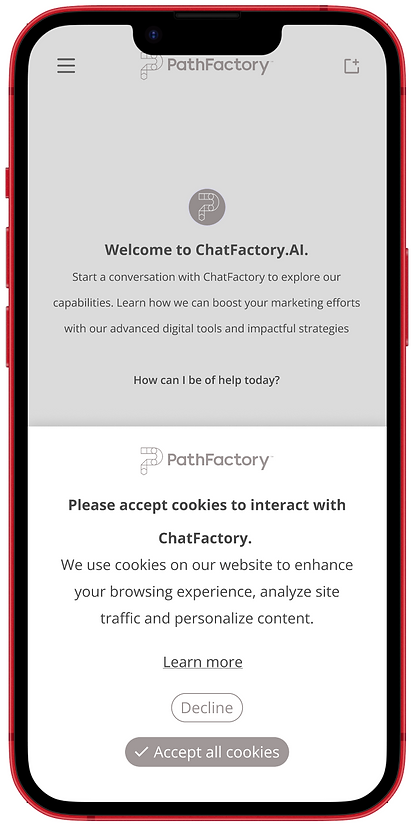
When we began the project in 2023, we would typically use Figma. In the examples below, the team created the task flow UIs for both desktop and mobile devices. As time went on, we also included V0.
Conversational ease of use is just as important as interface flow. We set out to showcase a display that helps customers accomplish their work by surfacing progressive disclosure—a design principle that reveals information gradually, showing only what's needed at each step to avoid overwhelming users while maintaining access to deeper functionality.
Mobile View
Flexible Branding
With established style guides, the team began applying visual design to the screens to ensure they adhered to the primary client brand. However, it became clear that this could be resold and therefore alternative styles and visual designs were also created with the capability to be white-labeled to serve their customers.
White Label Options for Customers


